
Comparing 26ft vs. 53ft Truck Advertising
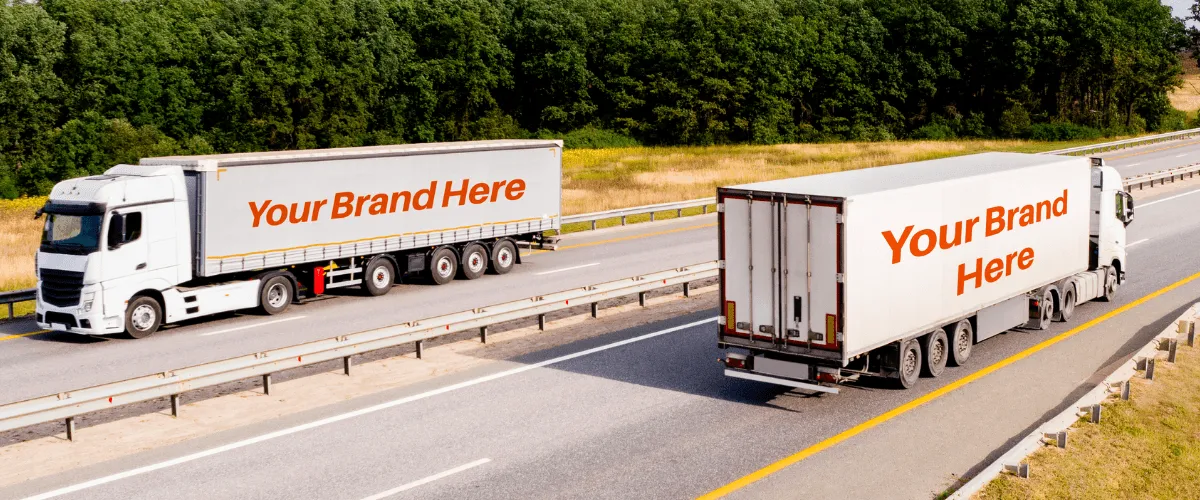
Choosing the right vehicle size is the foundational decision in mobile billboard advertising. In the Canadian market, the choice between the ubiquitous 26-foot (ft) box truck and the massive 53-ft semi-trailer determines more than just surface area—it dictates your primary route, audience, and overall campaign effectiveness.
Here is a comparison of advertising on a 26ft delivery truck versus a 53ft transport truck, focusing on reach, visibility, and cost-effectiveness.
1. The 53ft Semi-Trailer: The Highway Giant
The 53-ft semi-trailer, the standard for long-haul freight across Canada, provides the ultimate canvas for sheer scale and distance coverage.
| Feature | Analysis | Impact on Advertising |
|---|---|---|
| Reach & Route | Designed for inter-city and inter-provincial highways (e.g., the 401 in Ontario, the Coquihalla in BC, the Trans-Canada Highway). | Mass Impressions: Delivers the highest total number of daily impressions (tens of thousands) but with a shorter dwell time. |
| Visibility | Offers the largest possible canvas (up to 4,000+ square feet for a full wrap, including the cab) and sits very high off the ground. | Unavoidable Impact: Ideal for high-speed viewing. The message must be bold, simple, and legible from a long distance. |
| Target Audience | Primarily commuters, long-haul drivers, and logistics/fleet professionals traveling between major centres (Toronto, Montreal, Vancouver, etc.). | Effective for national brands, logistics companies, and B2B services targeting the transportation industry. |
| Cost & Logistics | Higher initial cost for the wrap/banner due to size. Route restrictions in urban cores are common due to length and turning radius. | Excellent Cost Per Thousand (CPM) impressions over long distances, but lower flexibility in city routes. |
2. The 26ft Box Truck: The Urban Specialist
The 26-ft box truck, typically used for local "last-mile" deliveries and moving services, is the champion of urban and suburban advertising.
| Feature | Analysis | Impact on Advertising |
|---|---|---|
| Reach & Route | Designed for city streets, residential areas, and commercial districts. Frequently stops at loading docks, retail centres, and high-street locations. | High Dwell Time: Generates fewer total impressions than a semi-truck but with significantly longer viewing times at traffic lights or during stops. |
| Visibility | Large, flat box surface but at a lower viewing height, making it perfect for pedestrians and drivers in adjacent lanes. | Detailed Messaging: The captive audience in slow traffic allows for more complex branding, QR codes, or a stronger Call-to-Action (CTA) on the rear door. |
| Target Audience | Local residents, shoppers, service users, and small business owners. | Ideal for local promotions, grand openings, services that target specific neighbourhoods, or regional brands. |
| Cost & Logistics | Lower production cost due to smaller size. Unrestricted access to virtually all city streets and parking areas. | Higher CPM for national reach, but the best vehicle for geo-targeting down to a specific postal code or neighbourhood. |
Matching the Truck to the Campaign
The choice between a 26ft and a 53ft truck depends entirely on the advertiser's core objective:
- Choose the 53ft Semi-Trailer for:
- National Brand Building: You need to be seen across provinces and major corridors.
- Sheer Scale: Your message is simple, visual, and needs maximum impact at highway speed.
- Choose the 26ft Box Truck for:
- Local Market Domination: You need to saturate a city, a borough, or specific suburbs.
- Direct Engagement: Your campaign requires a clear CTA that a customer can note down while stopped in traffic.
In the Canadian advertising landscape, the 53ft trailer owns the national, high-speed reach, while the 26ft box truck dominates the local, high-dwell-time urban market.